
Retain the character while restoring protection
Structure assessed first
We consider the weight of stone and the visible supporting roof.
Slates sorted carefully
We arrange varied sizes to preserve traditional diminishing courses.
Exposed details formed
We weather ridges, edges and abutments around the stone covering.
Respect the weight and pattern of stone slate
Traditional stone slates vary in thickness and size, giving the roof its established character but making careful setting out essential. Their weight also means the supporting structure needs proper consideration before local work or wider renewal begins. We inspect the slates, fixings, coursing and visible support, then explain what can be retained. During renewal, sound pieces can be sorted by dimension so larger slates sit lower on the slope and smaller units form diminishing courses above. This preserves the familiar pattern while restoring a secure route for rainwater down the roof.
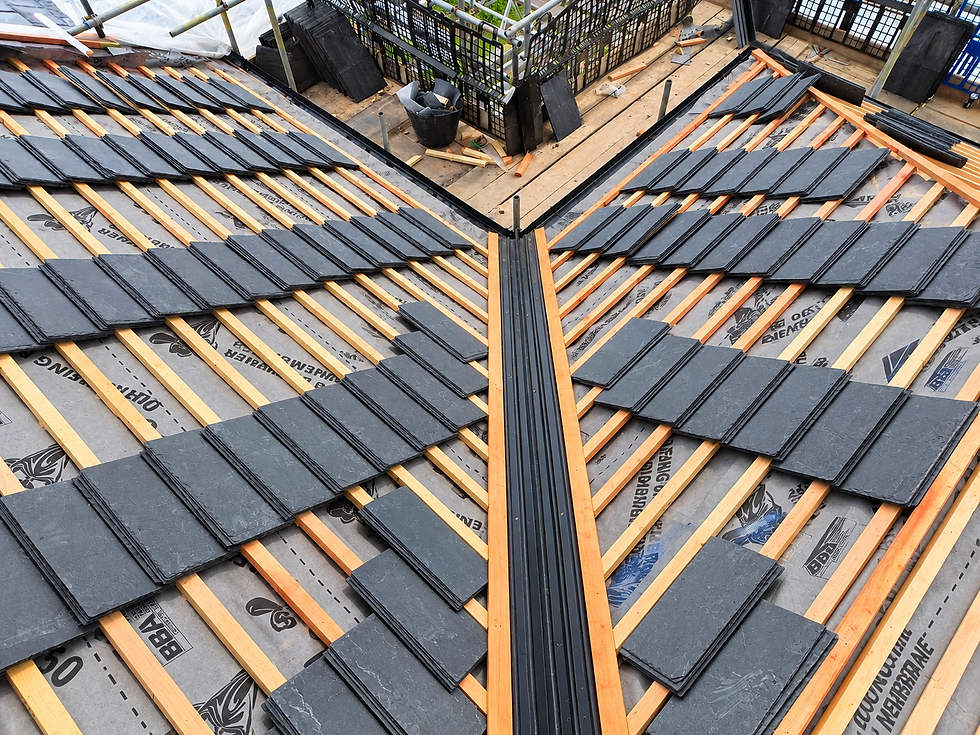

Weathering details shaped around irregular slates
Stone slate doesn't behave like a uniform modern tile. Each course must sit correctly, and the fixings, overlaps and changes in slate size need to work together. We also give close attention to ridges, verges, chimney abutments and penetrations. These details close exposed points where a small gap can let in wind-driven rain. Where damage is limited, a focused repair may retain more of the existing covering. If fixings or slates have failed across a wider area, we set out why broader renewal may provide a more dependable result.
Frequently asked questions
Why are larger stone slates laid near the eaves?
Traditional diminishing courses place larger slates lower on the slope and reduce their size towards the ridge. Careful sorting helps maintain this pattern, supports suitable overlaps and keeps the roof's established stone-slate appearance.
Can existing stone slates be reused?
Serviceable slates may be retained and sorted for reuse, depending on their condition, thickness and fixing points. We assess them individually during the work. Damaged or unsuitable pieces shouldn't be put back simply to preserve quantity.
Does a stone slate roof need a structural check?
Its considerable weight makes the visible supporting roof an important part of our assessment. We look for signs that affect the roofing scope and explain what we find. Any issue outside the agreed roofing work must be addressed appropriately before covering it.